
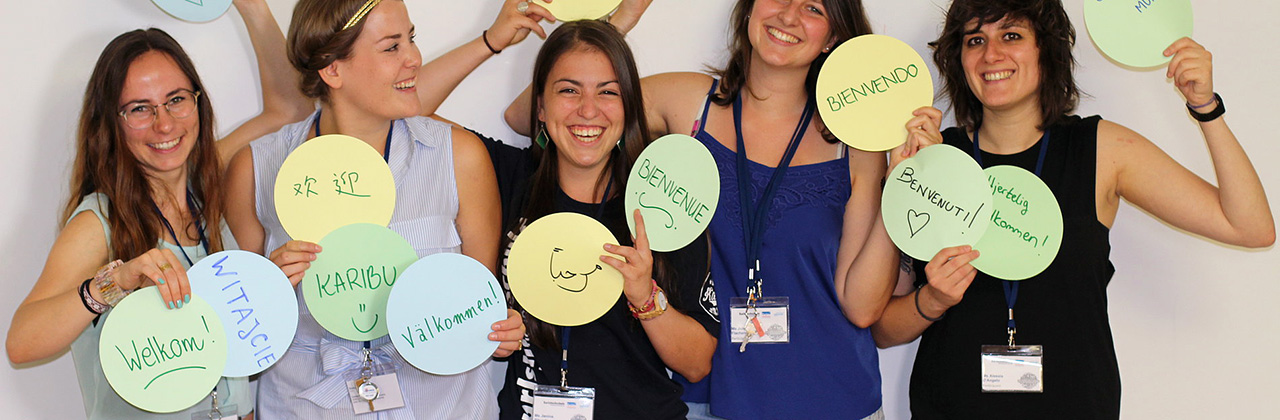
Willkommen – Let’s make a difference
Als Studierender an der Karlshochschule International University erlebe ich, wie sie sich von anderen Hochschulen unterscheidet. Sie ist eine Hochschule für angewandte Wissenschaften mit hohem akademischem Anspruch und zugleich tief in der Region verwurzelt.
Sie ist Heimat einer internationalen Community von Lehrenden und Studierenden. Sie vereint die Eigenschaften einer internationalen Business School mit einer kritischen Management-Perspektive und agiert gleichzeitig als Governance School für die transkulturelle Zivilgesellschaft.
Wir, die Studierenden und Lehrenden, setzen uns hier mit globalen Herausforderungen auseinander und entwickeln Bildungsangebote auf verschiedenen Ebenen, um uns auf die notwendigen Transformationen unserer Welt vorzubereiten. Die Karlshochschule verfolgt ein Leitbild einer interkulturellen, feministischen und diversen Hochschule, in der wir uns alle mit Respekt, Verantwortung und Engagement begegnen.
Neuigkeiten

Cosy, familiar, creative, productive and practice-oriented – that is my everyday university life.
Nur
Studium an der Karls. Fakten und Highlights kurz gecheckt.
- In 6 oder 8 Semestern zum Bachelor of Arts
- In 4 Semestern zum Master of Arts
- Staatlich anerkannt und FIBAA-akkreditiert
- Spitzenposition im CHE-Ranking
- Internationale, bunte und aktive Atmosphäre
- Englischsprachiges Studienangebot
- Auslands- und Praktikumssemester (Bachelor)
- Reale Unternehmensprojekte
- Kleine Lerngruppen und interaktive Lehre
- Individuelle Betreuung durch Professor*innen
- Fokus auf Persönlichkeitsentwicklung
Bachelor Vorbereitungsprogramm
Bachelor Studiengänge an der Karlshochschule
- Business Psychology | Change & Transformation Management
- Business Psychology | International Human Resource Management
- Business Psychology | Market and Consumer Psychology
- Communication Management
- Digital Management
- International Business | International Marketing
- International Business | Intercultural, Diverse and Inclusive Management
- International Business | Sustainability Management
- International Relations | International Security
- International Relations | Human Rights & International Law
- International Relations | Development Studies
- Politics | Political Communication
- Politics | Activism and Political Change
- Politics | Sustainable Developement
- Politics, Philosophy and Economics – PPE
Master Studiengänge an der Karlshochschule
- PreMaster (Zweisemestriger Teilzeit-Vorbereitungskurs)
- Management
- Social TransFormation: Politics, Philosophy and Economics
Master Spezialisierungen an der Karlshochschule
- Brands & Stories
- Digital Media
- Globalization, Governance & Trade
- Diversity Leadership & Feminism
- Sustainability and Urban Development
Die Hochschule
- 2005 staatliche Anerkennung durch das Ministerium für Wissenschaft, Forschung und Kunst Baden-Württemberg
- Studienprogramme: 15 Bachelorprogramme, zwei Masterprogramme
- 2015 Systemakkreditierung | Akkreditierungsrat
- derzeit ca. 400 eingeschriebene Studierende
- Hervorragendes CHE Ranking 2023/2024:
https://studiengaenge.zeit.de/studiengang/g2090172/politics-philosophy-and-economics#reiter-ranking - Category Award 2023:
https://www.studycheck.de/hochschulen/khs
Die Karlshochschule ist mein Forum der Ideen
Das persönliche Verhältnis zu unseren Interessenten, Studierenden sowie Vertretern und Partnern aus Wissenschaft und Praxis steht für uns an erster Stelle. Viele Wege führen an die Karls. Und verschiedene Touchpoints machen es möglich, sich kennenzulernen und auszutauschen: Auf Messen und Infotagen, bei Karlsgesprächen, Afterworks, Konferenzen und anderen Events, in Schnuppervorlesungen, auf der Website, dem Blog, den Sozialen Medien und selbstverständlich in unserer individuellen Beratung per Telefon, Skype oder ganz persönlich vor Ort. Kontakt zur Studienberatung +49 721 48095 777.
Die Lehre
- geprägt vom Erkenntnisinteresse am wirtschaftlichen, unternehmerischen und organisationalem Handeln in ökonomischen, sozialen, ökologischen und kulturellen Kontexten
- Verfolgung eines interpretativen Ansatzes der Wirtschafts- und Sozialwissenschaften
- Qualifizierung der Studierenden für die Übernahme von Management- und Führungsfunktionen in Wirtschaft und Gesellschaft, Vermittlung von kognitiv-theoretischem Wissen („rules“), Verfügungswissen („tools“) und Orientierungswissen (Wissen um ethisch gerechtfertigte Zwecke und Ziele)
- ausgelegt auf den schnellen und sicheren Weg zum Berufseinstieg
- Interkulturalität:
- Englisch als Unterrichtssprache
- obligatorisches Erlernen einer zweiten und wahlweise dritten Fremdsprache
- angebotene Sprachen: Arabisch, Chinesisch, Französisch, Russisch und Spanisch
- Auslandssemester an einer der zahlreichen Partneruniversitäten weltweit
Stimmen aus der Karls

This program provides a unique opportunity to refresh my knowledge and get familiar with the Karls early on. The positive experiences I’ve made in the PreMaster confirm my decision to do my Master’s here 100 %!
Elena

What are the interests of politics? What motives the economy? And how can human thought and action be explained? I’ve always been interested in questions like that.
Paul

I believe that at Karlshochschule I got to understand what role management plays in the cultural field and how tremendous it is in enabling artistic performance.
Friedemann Bauknecht

When I first thought of International Relations, I used to think of a very theoretical approach. But here at Karls that is not the only thing we do. The focus lies on team work and critical thinking, learning by doing and questioning everything in the process.
Svenja

I believe that culture has become an integral part of today’s economy. Through my studies I was able to develop personally and professionally.
Cornelius – Intercultural Management & Communication

In today’s digitized world we are incredibly sensitive to media content and the media makers and managers need an international perspective on the subject.
Nico

People always say that rethinking management is nothing but a myth; a fake claim without substance. For this Master’s that is not true. I am seriously rethinking everything!
Kai

Coming from a multicultural background, I find studying, thinking and creating in an environment as diverse as Karlshochschule to be a real blessing. I’ve never been one to fall when I can jump and at a place like the Karls you certainly learn how to jump high.
Oliver

Everything here is so international and it’s like you can experience the whole world.
Aakash
Für alle Studienprogramme beträgt die monatliche Studiengebühr 790 € für EU-Staaten und 1.090 € für Non-EU Staaten.

